Human-AI Narrative Synthesis to Foster Shared Understanding in Civic Decision-Making
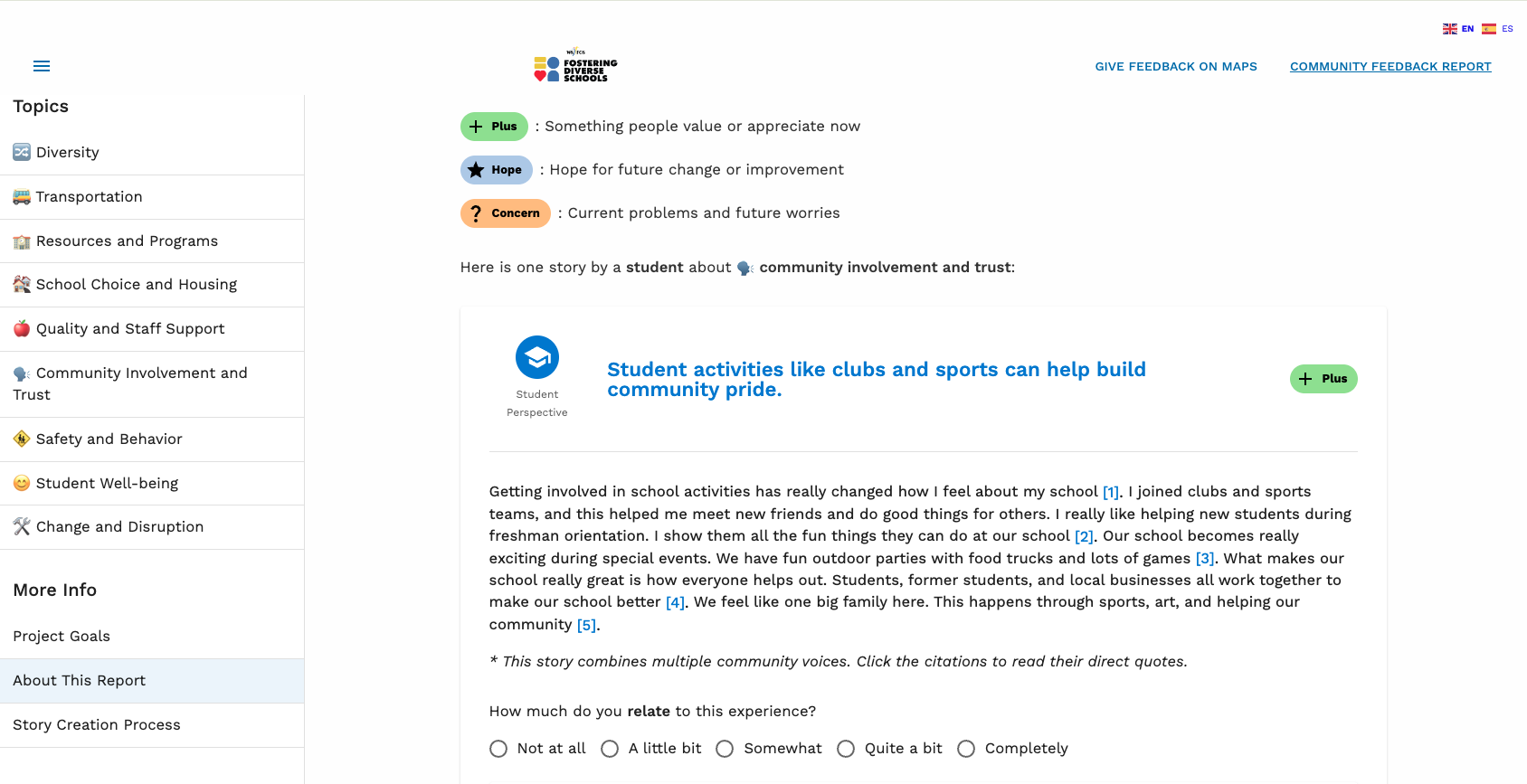
Community engagement processes, like school district rezoning, generate massive volumes of feedback that overwhelm traditional synthesis methods, creating barriers to shared understanding between civic leaders and community members alike. To address this, we developed StoryBuilder, a human-AI collaborative pipeline that transforms community input into accessible first-person narratives, deployed through a mobile-friendly interface. Our mixed-methods evaluation found that narratives helped community members relate across diverse perspectives, and that experience-grounded narratives generated greater respect and trust than opinion-heavy ones. We contribute a human-AI narrative synthesis system and insights on its acceptance and effectiveness in a real-world civic context.
Accepted to CHI 2026!
Voice to Vision: Enabling Shared Understanding in Civic Decision-Making through Participatory Data Infrastructure
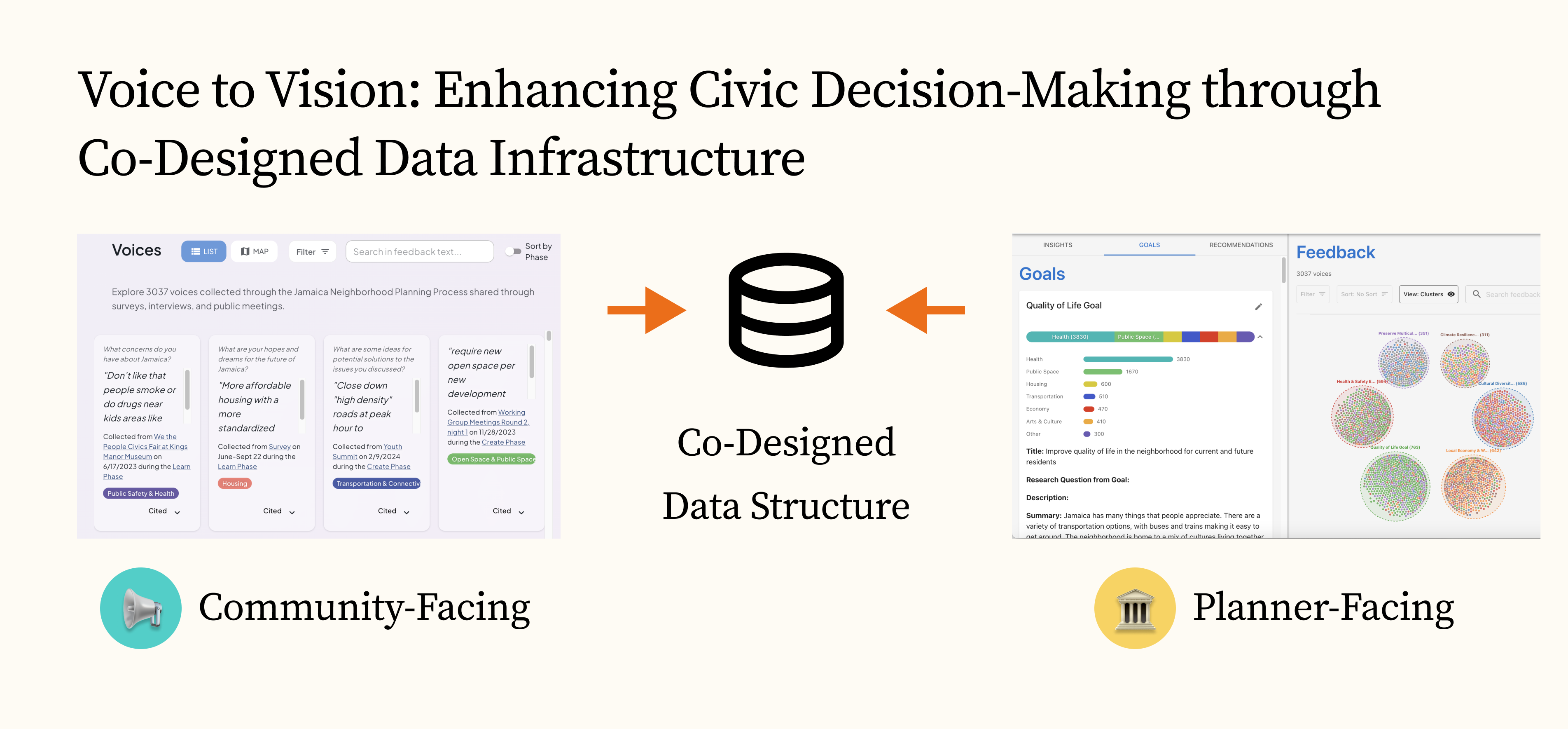
Trust and transparency in civic decision-making, like neighborhood planning, are eroding as community members frequently report sending feedback "into a void" without knowing how their input influences outcomes. To address this, we introduce Voice to Vision, a sociotechnical system that bridges community voices and planning outputs through interfaces for both community members and planners. Through iterative design and field evaluation, we find that community members want to see themselves reflected in the process and understand the rigor behind decisions, while planners value tools that make sense of diverse inputs. Our work contributes empirical findings and a complete system for how digital platforms can promote transparency and legitimacy in civic decision-making.
Accepted to CSCW 2026!
The Impacts of Transparency and Personalization on Feelings of Agency and Connection in Democratic Decision Making
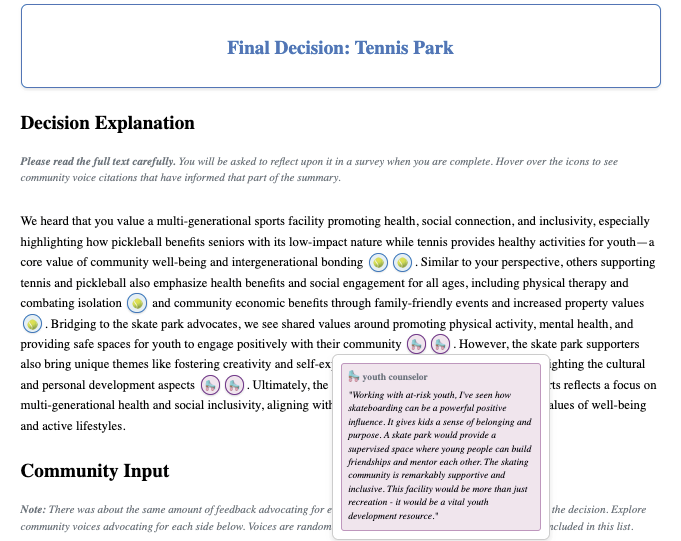
Community engagement processes often shape policies that affect people's daily lives, yet they frequently struggle to build transparency, understanding, and agency. This study examines how varying levels and types of transparency, including personalization, in technology-enabled civic decision-making affect perceptions of agency, vertical and horizontal transparency, and community connection. Through an experiment where participants advocated for a local policy position and received a decision under varying transparency conditions, we find that increased transparency improved perceptions of agency and transparency, while personalization had limited effects. Qualitative reflections highlighted horizontal transparency as particularly valuable for opening perspectives. We discuss design implications for civic technologies.
Accepted to CHI 2026!
BoundarEase: Fostering Constructive Community Engagement to
Inform More Equitable Student Assignment Policies
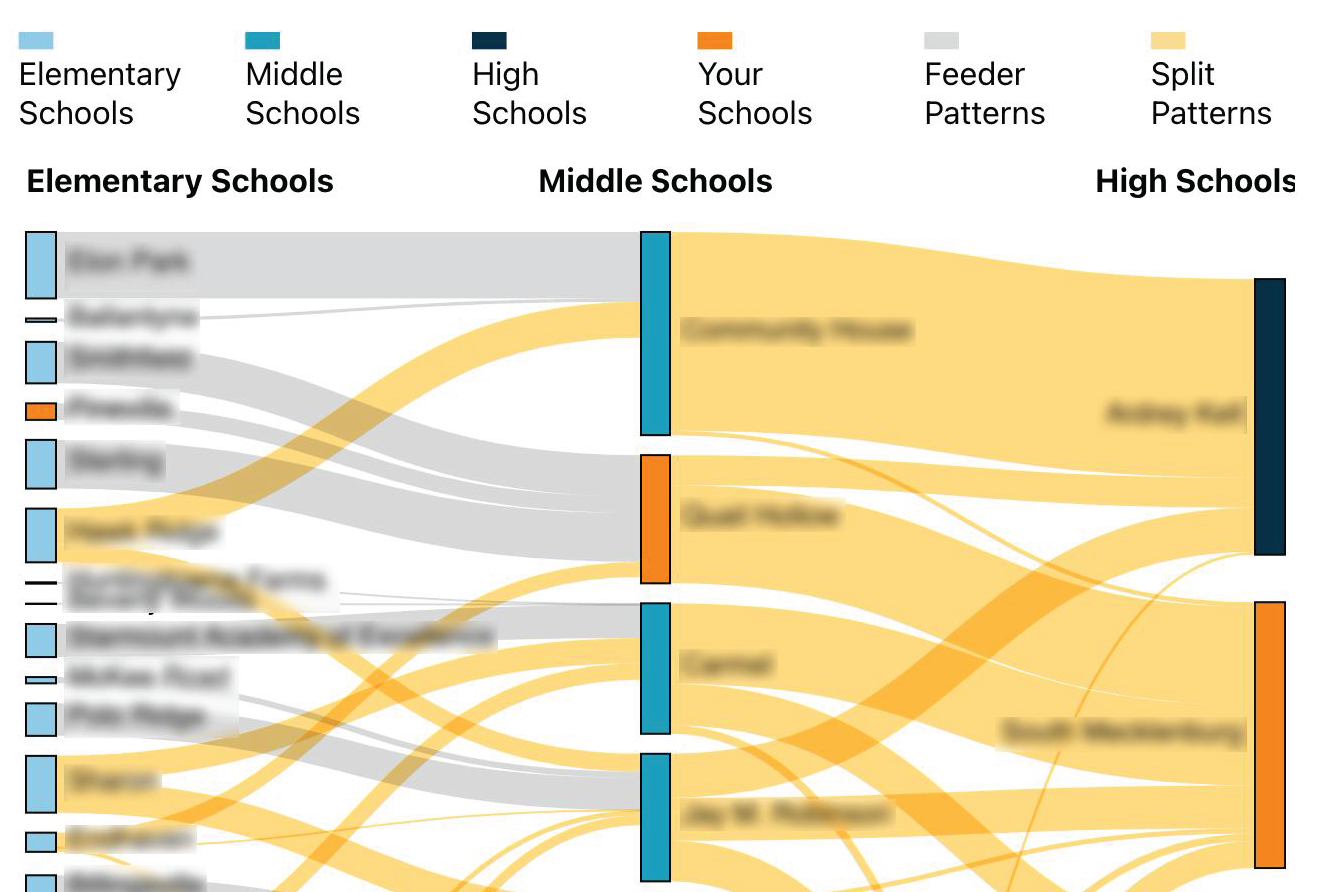
Public school districts shape access to quality education through student assignment policies like school attendance boundaries, yet community engagement processes for changing such policies are often opaque, cumbersome, and polarizing in ways that can perpetuate disparities. In collaboration with a large US public school district, we designed and evaluated BoundarEase, a web platform that allows community members to explore and offer feedback on potential boundaries based on their preferences. Through formative and evaluative studies, we find that BoundarEase prompts reflection on how policies impact families beyond one's own and increases transparency around policy proposals. Our work offers insights into community engagement challenges for student assignment policies and how sociotechnical systems can help mitigate polarization in local policymaking.
Accepted to CSCW 2025!